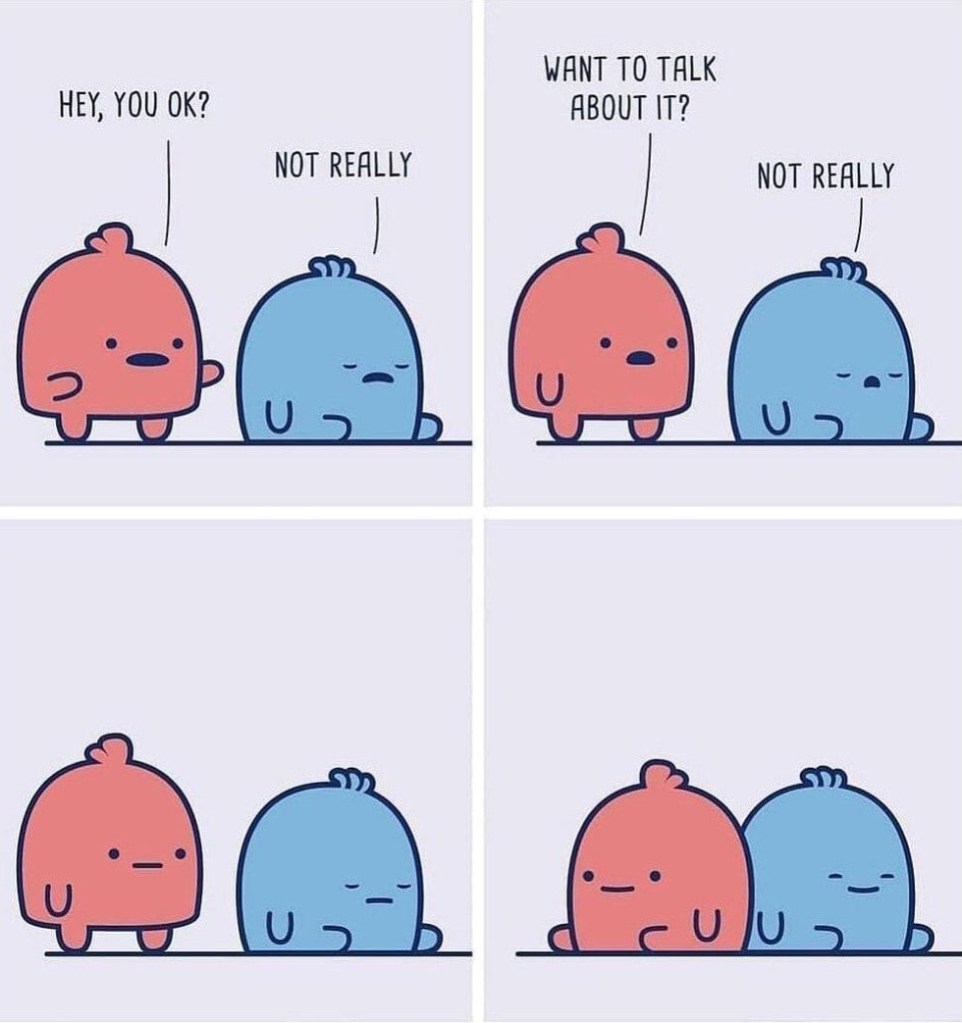
I haven’t written here in a while, and for a good reason. I needed some time to myself. May is Mental Health Awareness Month, and I’ve gone back and forth about writing this post. I haven’t wanted to share my story because I’m in a job search. But I’m sharing it now because my story is part of my identity. And when you hire me, you’re getting all of me.
I’m a typical first-born daughter. I’ve taken every personality test out there (and dived into astrology some), and I’m consistent in the results. My favorite to look at is the Enneagram. It’s the most usable and understandable to me. Enneagram 1w2s are the advocate: principled, purposeful, self-controlled, and perfectionistic. I value integrity and the truth and want to improve the world.
I like structure, order, and process. I’ve had to adapt my work style to address working in an industry that is often more reactive than proactive, and I have to say, it took almost 15 years, but I have a routine that helps me be me while also being fluid and agile. It’s a constant work in progress, but tweaking the process is part of who I am.
I learned at an early age that my brain is wired differently. It took me about 33 years to figure out the how. I mentioned before that I once worked as a part-time “professional” organizer. I put professional in air quotes because there are certified professional organizers, and earning that designation takes years of practice. This job unlocked self-awareness around my brain function and why I am the way I am. I tell people it’s like Tetris. You take everything out and follow The Home Edit’s plan, then figure out the best way to assemble everything. That’s how I approach work.
My mental health has always been a roller coaster. I’m open about my depression, but I never realized how anxiety is the crux of my life until recently. My anxiety often triggers my depression. Most of the time, my depression presents itself like typical depression – entirely down on myself, not wanting to be around others, and feeling like I’m not good enough. Imposter syndrome doesn’t help; it takes root at its worst when I’m down on myself. My anxiety is another thing. My anxiety takes flight when my Enneagram 1w2 tendencies are put to the test. And sometimes, the result isn’t depression but another set of negative feelings altogether.
I’ve been in and out of therapy most of my adult life. I first saw a therapist in college — hey, college students, did you know your school probably makes treatment available to you for free for a set number of sessions? I sure didn’t, and I wish I had known that before I found out. If you need help, reach out to student support services. I’ve had some great therapists and others (ok, just one) that made me feel worse, did nothing to help, and left me feeling like I’d been beaten like a punching bag after every session.
My preferred treatments are holistic, but that’s my preference. I don’t like taking medicine in general (it takes a lot to get me to take ibuprofen, even for a headache). Still, I’ve never really been into psychotherapy drugs, and that’s proven to be a hurdle. Two therapists stand out in improving my overall mental health – the first was a solely holistic therapist. She embraced my desire not to take prescription medication and helped unlock alternative methods to deal with my stress, which is the biggest trigger for my anxiety. The other was some years later and finally convinced me to try prescription meds with new developments in drug development, and we were able to find a solution that I was comfortable with.
Fast forward to now. I got away from treatment for a while (that horrible therapist that happened after these two didn’t help.) But, I started online therapy late last year through Better Help. It was the most cost-effective option for me at the time. I like it because it’s more organic and more like texting a friend than having a once-a-month session to hash out everything. I recently had to stop because I’m on a fixed income, but I can’t wait to start again.
I have childhood issues to work through on top of all the other things, but treatment is ongoing, and I won’t be “fixed” overnight. In truth, I don’t know that I’ll ever be fixed. For me, it’s about managing and coping. Who I am will always be a part of me, and I will always be a work in progress. But therapy, coupled with holistic approaches, like meditation and self-care routines like floating and massages (yes, they can be a form of medical stress management), have helped me. I share my story because I know I’m not alone. And this stigma we as a society have surrounding mental health needs to change.
That doesn’t mean unlimited PTO or unlimited snacks in the office. It’s things like offering treatment options without the need to get on a year-plus long waiting list or jump through impossible hoops, helping community groups trying to reach unemployed and underserved populations, expanding FSA and HSA benefits to support alternative treatments, reducing medication costs, supporting universal childcare (a major stressor financially and prohibiting opportunity for many) and having empathy. It’s also recognizing that no matter how hard you try, home life affects work life and vice versa. Asking people to bring their whole selves to work means embracing who they are and recognizing that not everyone has had the same experience or feels the same way. Toxic cultures only further inhibit productivity and well-being. It’s why I’ve prioritized my mental health in my job search.
I know every job isn’t without its stressors or issues. But, as Maya Angelou said, “I’ve learned that people will forget what you said, people will forget what you did, but people will never forget how you made them feel.” I hope the one thing we all take from the past year is more kindness and empathy. Telling people, personally or professionally, that they don’t fit is the worst thing you say. Telling people to “just get over it” or “be happy” doesn’t help. Those words leave lasting, invisible emotional scars.
I am finally at a place where I am happy with who I am. I finally dare to be me. And I am finally ok with everyone knowing who I am and where I stand. I’m a loyal friend who will tell you the truth even when it hurts. I’m a supportive friend who will always push you to improve. And I’m the dependable friend that will always take the call or text because I’ve been there and know how it can be interpreted when both go unanswered. But also know I have boundaries because that’s how I care for myself. We all need them.
And know this — it’s ok to ask for help. It’s ok not to be ok. We need to talk more about mental health, not judge people for sharing their experiences. The last thing I want to share with you is the words I need to hear when I’m at my lowest:
“You matter, and I’m here to remind you of that fact.”
 CASSIE CHANCE